






Table of contents
Get in touch
Expect response in 4 hours.

Honestly, the blue link is no longer the prize; the citation is.
The best AEO tools in 2026 aren't the ones with the flashiest dashboards. They're the ones that turn "is my brand cited in ChatGPT" into a number you can act on. And here's the part most lists won't tell you upfront; nearly every "best AEO tools" roundup is written by a company selling one of the tools. For a change, this one isn't.
We deploy answer engine optimization for clients every day, so this version also has the trade-offs.
In the piece that follows, you'll find verified pricing, honest review scores, and where each AEO tracking tool in 2026 actually earns its subscription, along with dedicated picks for agencies, ecommerce brands, and SaaS teams.
How we built this list: We checked every price, funding figure, and rating against each vendor's live pricing page or G2 listing as of September 2026. AEO pricing changes often. Plans get renamed, and add-ons get bundled, so confirm on the vendor's site before you buy.
What AEO actually is (and how it differs from GEO and SEO)
Answer engine optimization (AEO) is the practice of structuring your content, entities, and authority so AI answer engines such as ChatGPT, Perplexity, Google AI Overviews, quote your brand as the direct answer. These three terms usually get blurred, so here’s a quick differentiation:
~ SEO wins the link: rankings, keywords, backlinks, clicks.
~ AEO wins the answer: being the source an engine cites when it responds.
~ They share a foundation, credible, well-structured, authoritative content, but you measure and optimize them differently. your content is used to build the full response, even when you’re not explicitly mentioned.
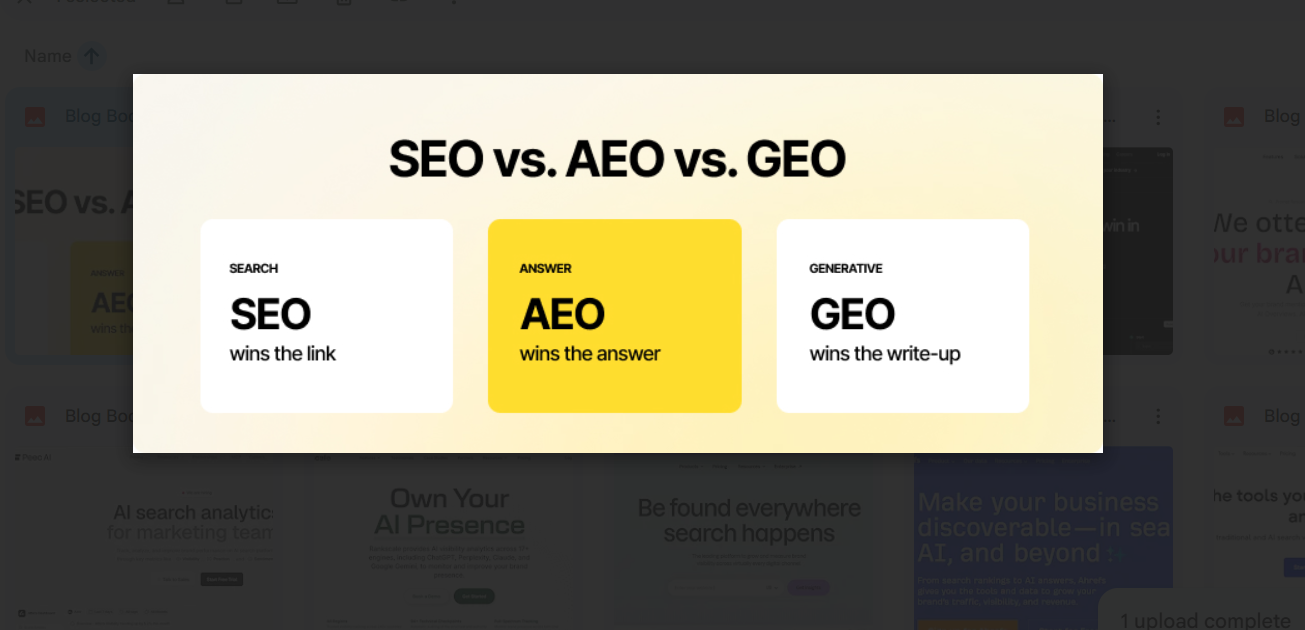
They share a foundation, credible, well-structured, authoritative content, but you measure and optimize them differently.
If your buyers are increasingly turning to AI before they turn to Google, AEO optimization tools 2026 are no longer optional line items. They're part of the core marketing stack.
The best AEO tools in 2026, grouped by the job you're hiring them to do
The smartest buyers on the block know no single tool does everything, so the best bet is to assemble a stack.
We have done the spade work for you, and here's the field, sorted by job.
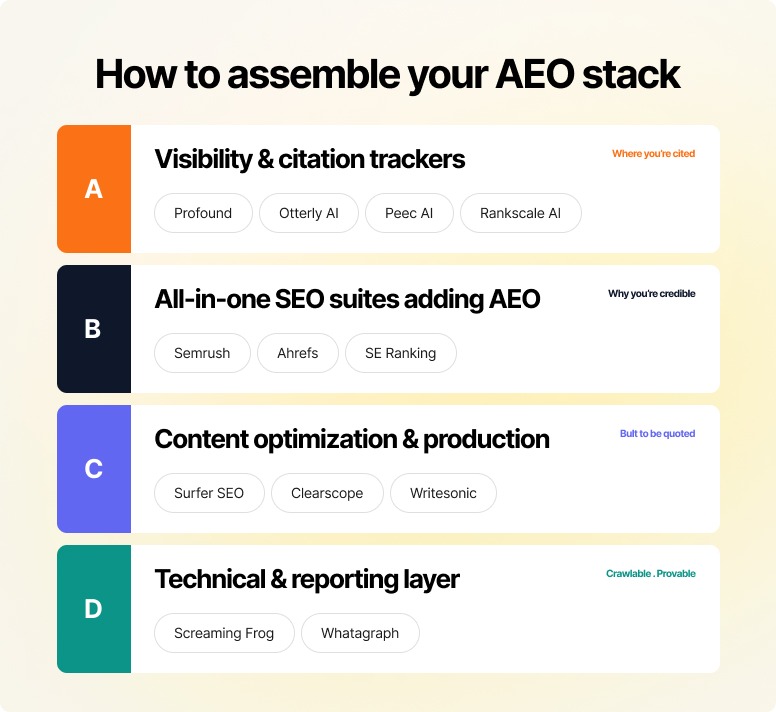
Group A ~ AI visibility & citation trackers
This is the core of any AEO program, knowing where you're cited, by which engine, against which competitors.
1. Profound
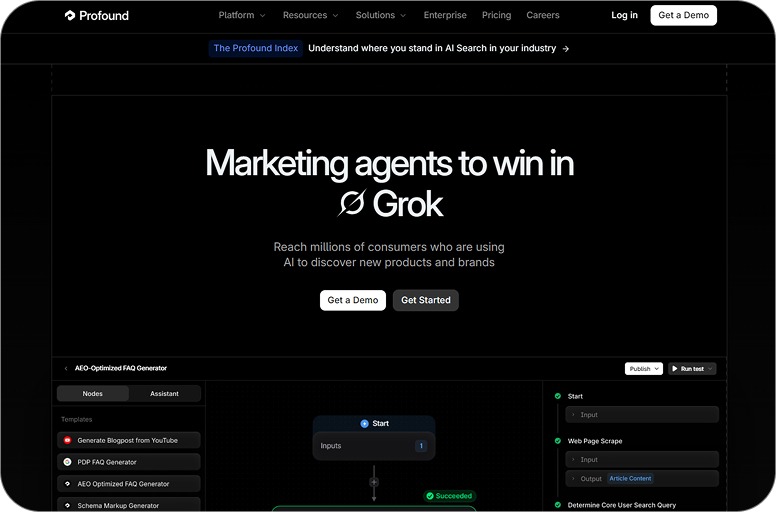
What it does: Tracks brand mentions, citations, sentiment, and prompt-volume demand across the major engines, with an Agents feature that drafts AEO content. Standout: prompt-volume data nobody else surfaces.
Pricing (official): Starter $99/mo (ChatGPT only, 50 prompts, a demo); Growth $399/mo (3 engines, the real entry); Enterprise custom ($2,000–$5,000+).
Pros: deepest competitive and demand intelligence; consistent board-ready data; in-platform content generation.
Cons: $399 is the true entry, not $99; high cost-per-prompt; broad coverage needs Enterprise.
Rating: G2 Winter 2026 AEO category Leader; backed by a reported $96M raise at a $1B valuation, serving Ramp, MongoDB, Figma, and DocuSign.
Best for: enterprises where AI visibility moves revenue and an analyst can drive it.
The catch: the dashboard is gorgeous and dense, but without someone to read it daily, you're paying a premium price for a screensaver.
2. Otterly AI
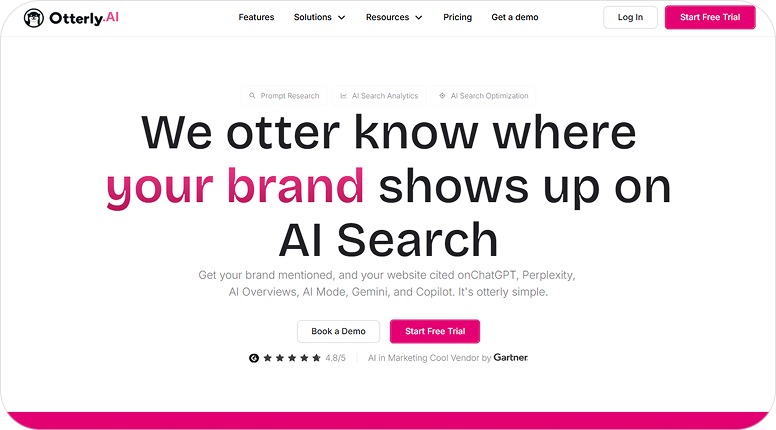
What it does: Automated daily monitoring of brand mentions across AI answers, in workspaces built for many clients. Standout: live, mid-call client reporting.
Pricing (official): Lite $29/mo (15 prompts), Standard $189/mo (100), Premium $489/mo (400), Enterprise custom. Gemini and Google AI Mode are paid add-ons. Free trial.
Pros: lowest serious entry point; genuinely fast setup; Looker Studio export and Semrush integration.
Cons: weekly refresh on core plans; prompt pricing climbs at scale; thin on execution guidance.
Rating: 4.9/5 on G2; a Gartner Cool Vendor with 10,000+ users.
Best for: agencies proving AI visibility across a book of clients.
The catch: independent multi-month testing found rising mention scores didn't always move traffic, so track business outcomes, not just the index.
3. Peec AI
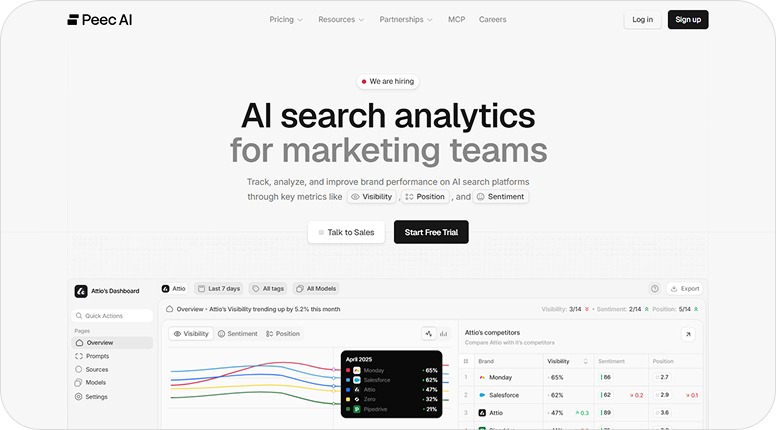
What it does: Tracks visibility, position, and sentiment across engines and shows which sources competitors use to win citations. Standout: uncluttered UI and unlimited seats.
Pricing (official): Brand from ~€89/$95/mo (Starter, ~25 prompts) to $245/mo (Pro); $495/mo (Advanced). Extra engines $35/mo–$165/mo. Free trial.
Pros: affordable, low-friction; unlimited users on every plan; strong competitor benchmarking.
Cons: extra engines cost more; limited API; no content generation, audits, or traffic attribution.
Rating: consistently positive on G2 for clarity and value.
Best for: teams that want reliable tracking and already have content people to act.
The catch: Peec gives you the "what," never the "so what", so bring your own strategy.
4. Rankscale AI
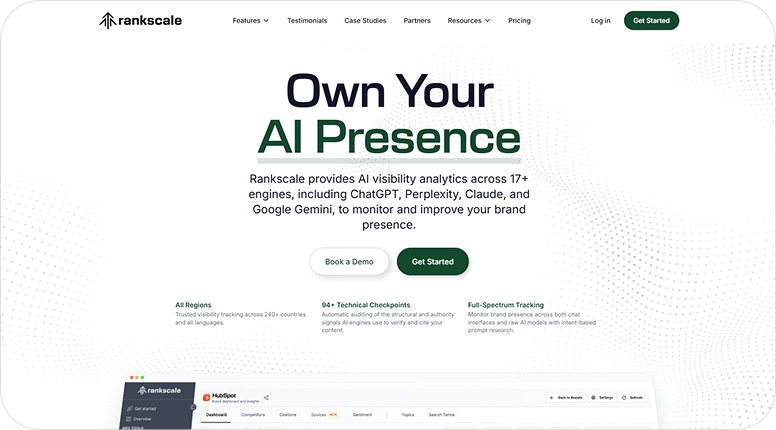
What it does: Citation analysis, sentiment, competitor benchmarking, query fan-out tracking, and AI-readiness site audits across a wide engine list. Standout: breadth with no per-engine add-ons.
Pricing (official): Pro $99/mo (1200 credits, ~4800 responses, 50 audits), Growth $385/mo, Enterprise $780/mo. 7-day trial; credit-based.
Pros: cheapest credible entry; engines included, not gated; site audits with optimization paths; new REST API and Looker Studio.
Cons: tracks output, not crawler visits; you implement the fixes; no GA4 attribution.
Rating: widely credited as the most affordable AI visibility tool; newer, fewer reviews.
Best for: starting AEO seriously without an enterprise budget.
The catch: it shows you the work, it doesn't do it for you.
Group B ~ All-in-one SEO suites adding AEO
Before AI cites you, it decides you're credible. That's classic SEO territory, and these suites own the data behind it.
5. SEMrush
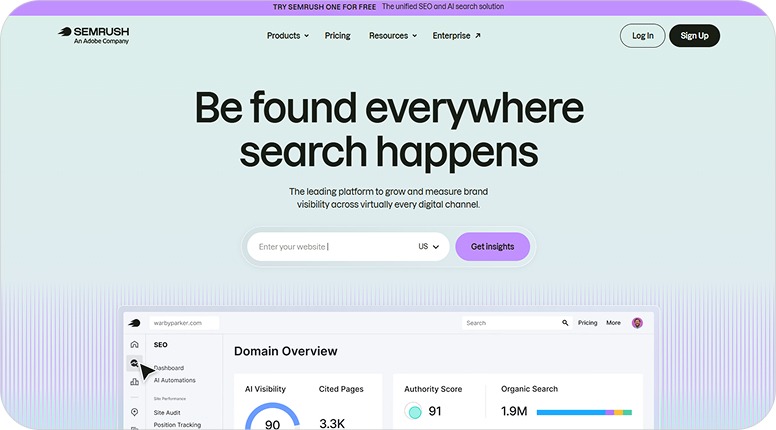
What it does: Keyword gaps, competitor mapping, Position Tracking, Site Audit, plus an AI Visibility Toolkit. Standout: the largest dataset in SEO.
Pricing (official): SEO Classic Pro $117.33 / month, Guru $208.33 / month, Business $416.66 / month. AI Visibility Toolkit +$99/mo per user, or bundled in SEMrush One from $199/mo.
Pros: all-in-one breadth; white-label reports; AI PR Toolkit.
Cons: modular pricing compounds fast (AI add-on is per-seat); AI citation depth trails purpose-built tools.
Rating: ~4.5/5 on G2.
Best for: the competitive-intel layer under any AEO program.
The catch: treat it as research, not as your system of record for AI citations.
6. Ahrefs
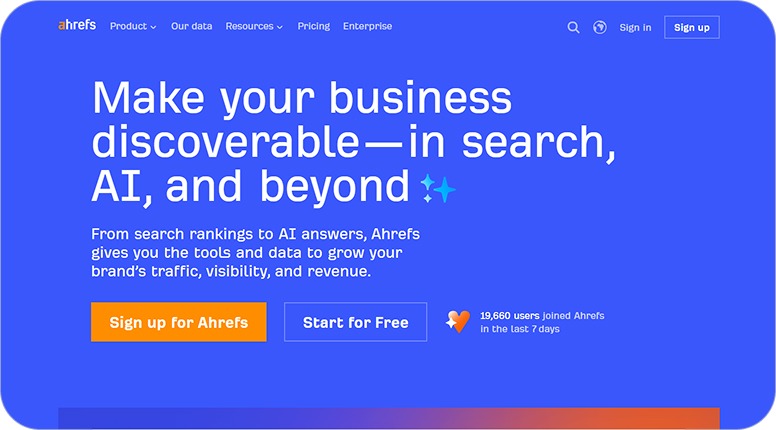
What it does: Best-in-class backlink and content intelligence; Brand Radar adds AI Share of Voice from a 199M+ prompt database. Standout: ties AI visibility back to search demand and real web sources.
Pricing (official): Lite $129 / Standard $249 / Advanced $449 / Enterprise $1,499. Brand Radar add-on ~$199/mo per AI index or ~$699/mo for the six-platform bundle.
Pros: unmatched link data; explains why citations land where they do.
Cons: full AI coverage pushes past $800/mo; testers have flagged real accuracy gaps in Brand Radar mention counts.
Rating: ~4.5/5 on G2.
Best for: authority-led programs.
The catch: cross-check Brand Radar's AI numbers before you put them in a client deck.
7. SE Ranking
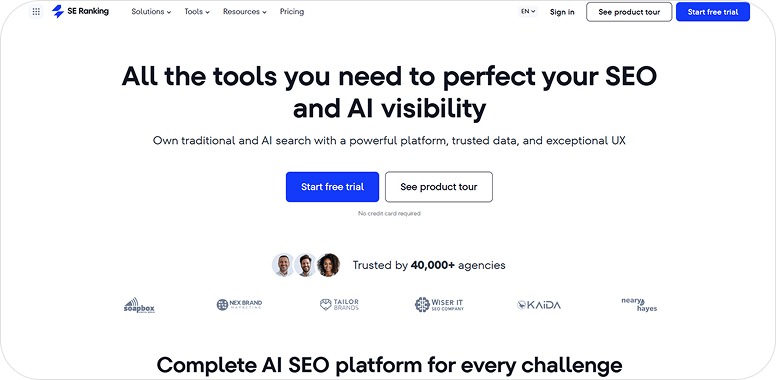
What it does: Rank tracking, audits, competitor research, white-label reports, with an AI Search add-on (SE Visible) for AI-answer visibility. Standout: multi-client value at a sane price.
Pricing (official): Core $103.20/mo, Growth $223.20/mo. AI Search add-on / SE Visible from $71.20/mo. Free 14-day trial.
Pros: agency-friendly per-client economics; solid white-label; SEO + AEO under one roof.
Cons: power users hit depth ceilings on dataset size and refresh cadence.
Rating: 4.8/5 on G2 across 1,400+ reviews.
Best for: SMB- and mid-market-heavy agency books.
The catch: great as the steady-state layer; pair it with a dedicated tracker when AI visibility is the headline.
Group C ~ Content optimization & answer-ready production
Citations go to content built to be quoted. These turn that into a repeatable process.
8. Surfer SEO
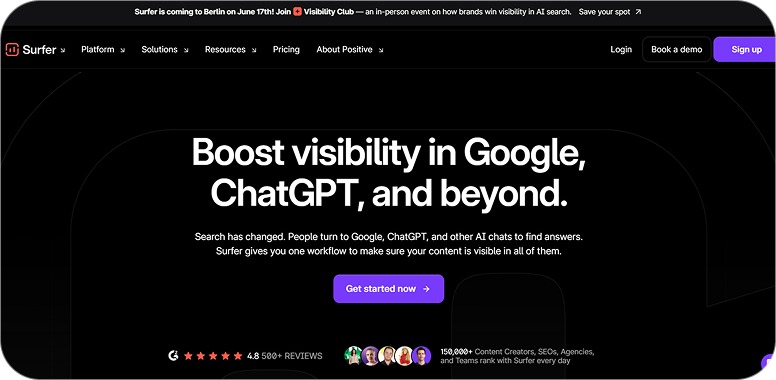
What it does: Scores drafts against on-page coverage as writers work; an AI Tracker add-on monitors AI visibility. Standout: a content score that correlates with rankings better than most.
Pricing (official): Discovery $49/month billed yearly, Standard $99/mo, Pro ~$182/mo, Enterprise custom.
Pros: elite content editor with entity optimization; frictionless Google Docs workflow.
Cons: add-ons stack up; drafts need real editing; no true free trial.
Rating: 4.8/5 on G2 across 500+ reviews.
Best for: publishing at volume across writers.
The catch: the score turns green long before the content is actually good. Use it as a guardrail, never the judge.
9. Clearscope
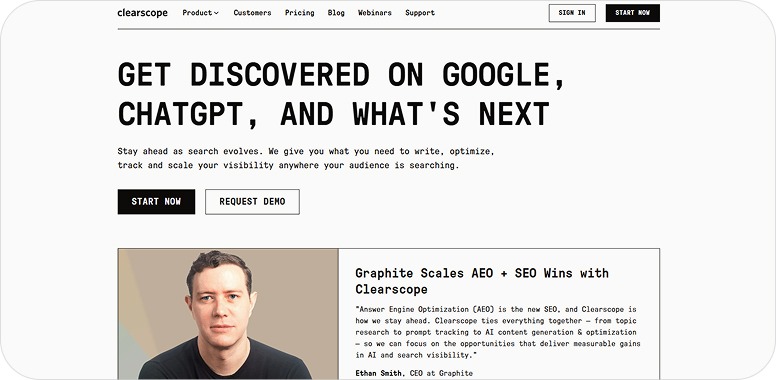
What it does: Content reports, term coverage, and letter-grade scoring that enforce a consistent editorial standard, now extending into AI Tracked Topics. Standout: clean grading editors trust.
Pricing (official): Essentials $129/mo, Business $399/mo, Enterprise custom. Unlimited users and projects.
Pros: best-in-class brief and grading discipline; simple to adopt; bootstrapped vendor that has lowered prices over time.
Cons: premium per-report cost; lighter on volume production than rivals.
Rating: strong, consistent marks on G2 for output quality.
Best for: editorial-led teams where QA is the bottleneck.
The catch: it makes flagship pages excellent, so pair it with cheaper tooling for long-tail volume.
10. Writesonic
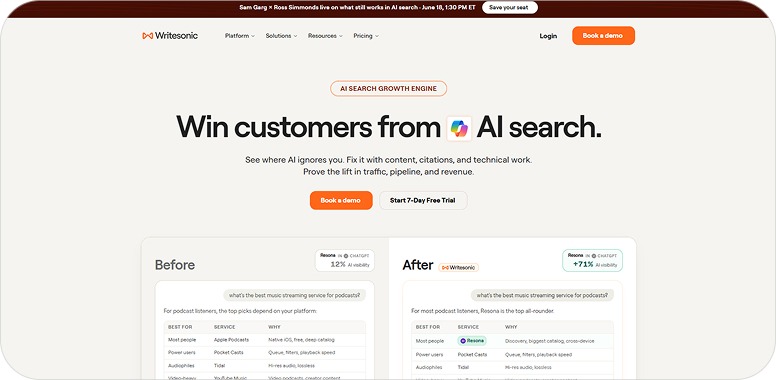
What it does: Pairs prompt tracking and missed-citation detection with an Action Center that tells you what to rewrite and re-publish. Standout: the closest a single tool gets to closing the loop.
Pricing (official): GEO tiers from ~$79/mo (Starter, annual), Basic ($199/mo) and ~$399/mo billed annually (Advanced); content-only plans (~$20) exclude AI tracking. Enterprise custom.
Pros: tracking + optimization workflows together; in-platform content generation; SOC 2 / GDPR / CCPA.
Cons: GEO features gated to higher tiers; one-project limits bite; thin on backlinks.
Rating: 4.7/5 on G2 across 2,000+ reviews (covers the wider platform).
Best for: teams wanting tracking and execution under one login.
The catch: Starter is effectively ChatGPT-only, so budget for Professional to get real coverage.
Group D ~ Technical & reporting layer
AEO collapses if pages can't be crawled or clients can't see progress. This layer protects both.
11. Screaming Frog SEO Spider
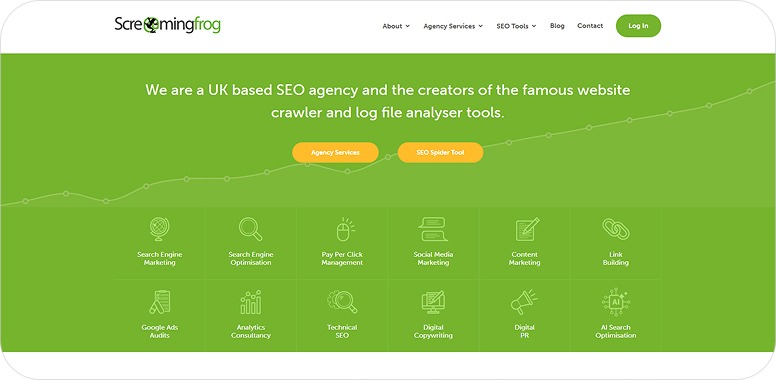
What it does: Desktop crawler that finds broken canonicals, noindex slips, redirect chains, missing schema, and the issues that quietly suppress AI and Google visibility. Standout: deep diagnostics in minutes.
Pricing (official): Free up to 500 URLs; paid license £199/year (~$279) per user, unlimited crawls.
Pros: unbeatable value; structured-data validation; integrates with GA4 and Search Console.
Cons: desktop-only (no continuous monitoring); steep for beginners; resource-heavy on big sites.
Rating: consistently top-rated for technical audits on G2.
Best for: the technical baseline before any AEO work begins.
The catch: it only finds problems when someone runs a crawl, schedule it.
12. Whatagraph
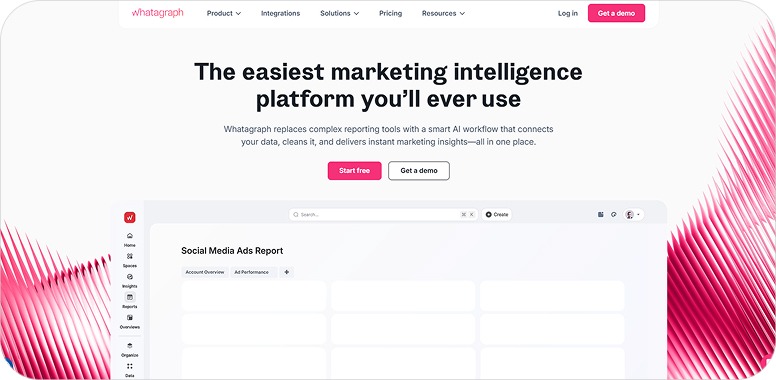
What it does: Turns 50+ data sources into branded, scheduled, client-ready dashboards that blend SEO and AI visibility. Standout: the best-looking reports in the category.
Pricing (official): forever-free tier (5 source credits); paid from ~$229/€249/mo (Start), Boost ~$463/mo billed annually, Max custom. Annual billing on paid plans.
Pros: polished white-label dashboards; 50+ integrations; unlimited users and reports.
Cons: premium for reporting-only; annual billing; credits escalate with multiple clients.
Rating: 4.5/5 on G2 across 270+ reviews.
Best for: agencies where report quality drives retention.
The catch: if your tracker already white-labels, you may not need it. Add it only when clients want one dashboard across every channel.
Wondering how we know? Well, this is the same production muscle behind our enterprise work for brands like National Geographic and Ogilvy. We don't review these tools from the outside; we run them on deadlines.
A look at how we use AI-powered SEO tools at Mavlers
We use platforms like SEMrush, Searchable, ChatGPT, and Claude to analyze AI-driven discovery patterns, monitor citation visibility, and surface opportunities faster than traditional manual reviews.
AI-assisted audits help us identify missing entities, definitions, FAQs, comparisons, and source gaps that can limit a brand's visibility in AI-generated answers.
We also track answer presence and citation patterns across emerging AI search experiences to understand where brands are being discovered, referenced, or overlooked.
The technology accelerates research, monitoring, and analysis. Our specialists interpret the findings, prioritize opportunities, and translate visibility signals into measurable business outcomes.
We're not optimizing for bots. We're making brands easier for both humans and AI systems to understand, trust, and recommend.
Recommended AEO tools for agencies
If you manage more than one brand, the calculus changes. The best AEO tools for agencies aren't necessarily the ones with the deepest data; instead, they're the ones that survive a client call with fast setup, per-client workspaces, and white-label reports that don't require an analyst to translate.
Three deserve a second look through that lens.
- Otterly AI is built for exactly this with live mid-call reporting and the lowest serious entry price on this list.
- SE Ranking bundles SEO and AI Search under one login at agency-friendly per-client economics, which matters when you're running fifteen accounts, not one.
- Whatagraph exists purely to make the report look like it came from your team, not a vendor's export button.
Our own answer to "best AEO tools for agencies" has been a stack, not a single tool, which includes a tracker for the data, a suite for context, and someone who reads the dashboard daily. The tool never replaces the analyst; it just gives the analyst better raw material.
AEO tools for ecommerce brands
Ecommerce has a different citation problem than B2B. AI engines pull specs, prices, and stock status straight from product schema, so the best AEO tools for ecommerce brands need strong structured-data validation, not just prompt tracking.
Here’s a ready-reference AEO tools comparison for ecommerce specifically in 2026:
AEO tools for SaaS companies
SaaS buyers ask AI to compare features and pricing before they ever reach a demo page, so the best AEO tools for SaaS companies need to track comparison-style prompts ("X vs Y," "alternatives to X") specifically, not just branded mentions.
Profound's prompt-volume data is built for this. It shows which comparison queries are actually happening at scale, something a generic rank tracker won't surface. Ahrefs' Brand Radar ties that visibility back to the backlinks and reviews driving it, useful when a competitor is winning citations you should own. And Writesonic's Action Center is the closest thing to closing the loop between finding a missed citation and rewriting the page that should have won it.
So if your growth is comparison-driven, the best AEO tools for SaaS companies separate branded mentions from "alternative to" mentions in the data. Most trackers lump them together, and that's the number that actually predicts pipeline.
How to choose the right-fit AEO tool (Answering the 6 questions that will get you there!)
Every list ranks tools. None tells you how to decide for your situation. Before you look at a single dashboard, answer these:
- How many brands or clients? One brand favors depth, while many clients demand multi-client workspaces and white-label reporting.
- Which engines actually matter for your buyers? Most B2B lives in ChatGPT, Perplexity, and AI Overviews. Watch for per-engine add-on fees that quietly double the bill.
- Do you need to act, or only monitor? Pure trackers tell you the score. Execution-capable tools help you change it.
- In-house team or outsourced execution? A tool is only worth its price if someone has the hours and skill to act on it.
- Board-ready reporting or a working dashboard? Enterprise stakeholders want a polished narrative; operators want speed.
- Budget vs depth. €20 buys directional data while $399+ buys prompt-volume intelligence. Be honest about which you'll actually use.
What "winning" actually looks like
Stop measuring AEO like SEO. The numbers that matter are citation frequency, Answer Share of Voice against named competitors, sentiment of how you're described, and the ratio of branded to unbranded mentions.
And brace for the counterintuitive part: sessions can fall while revenue climbs, because the model hands your answer straight to a buyer who never visits the page. If your reporting still leads with traffic, you're grading the wrong exam.
Why you still need an AI search partner (and why no AEO tool can replace one)
Every tool on this list does one job well: it measures. It tells you where you’re cited, where a competitor is, and which prompts you’re missing. What it can’t do is decide what to change, change it, and prove the change worked. That gap is where AEO programs stall, and it’s the reason the tools’ own “catch” lines read the way they do: Peec gives you the “what,” never the “so what.” Rankscale shows you the work, it doesn’t do it for you. Profound without a daily reader is “a screensaver.”
A good AI search partner closes that gap. Here’s why the role doesn’t go away, however good the software gets.
1. A tool gives you a score while a partner moves it.
Trackers report citation frequency, share of voice, and sentiment. None of them rewrite your page, fix your schema, restructure your comparison content, or earn the third-party mentions that engines lean on. Someone has to take the finding, turn it into a brief, get the page written, edited, published, and re-tested. A partner owns that loop end to end. The tool just feeds it.
2. The data needs a human to interpret it.
As the reviews above show, the numbers aren’t always clean. Otterly’s testing found rising mention scores that didn’t move traffic. Ahrefs’ Brand Radar counts have been flagged for accuracy gaps. A dashboard will show all of it with equal confidence. A partner cross-checks across tools, separates noise from signal, and tells you which movements are worth acting on, and which are just noise.
3. Citations are earned in more places than your website.
AI engines don’t only read your pages. They pull from review sites, comparison articles, forums, publications, and wherever else your category gets discussed. Closing a citation gap often means on-page restructuring, entity clean-up, and off-site work like digital PR, listings, and reviews, all in the same plan. No single tool runs that across channels. A partner sequences it so the effort lands where it will actually change what the engines say.
4. The landscape changes faster than any stack.
Engines add features, plans get renamed, add-ons get bundled, and the per-engine fees mentioned earlier can quietly double a bill. The tool that fit in January may be the wrong fit by Q4. A partner is tool-agnostic. They review the stack as things shift, drop what’s not earning its subscription, and add what is. A vendor, by definition, will only ever recommend its own platform.
5. The real cost is the labor, and someone has to own it.
As the FAQ below says, the license is $99–$500 a month, and the real line item is 20–40 hours of skilled execution on top. If that time doesn’t exist in-house, the tool sits unused. A partner brings the hours, the process, and the accountability for results, not just access to a dashboard.
6. Reporting has to connect to revenue, not just visibility.
Sessions can fall while revenue climbs. A tracker will show you mention counts; it won’t tell your CEO or your client what that did for pipeline. A partner connects visibility to the numbers leadership actually cares about, and has the judgment to say when the metrics are telling a story that isn’t true.
What the tool does vs. what the partner does
Here’s what to look for in an AI search partner:
- Tool-agnostic. They recommend what fits your buyers and budget, not what they resell.
- Execution, not just audits. They write, edit, publish, and re-test, instead of handing you a PDF of gaps.
- Honest about measurement. They tell you what the data can and can’t prove.
- Tied to business outcomes. Reporting goes beyond mentions to pipeline and revenue.
- White-label ready (for agencies). Their work should drop into your client reporting and delivery without friction.
The tool is the instrument. The partner is the one who plays it. Pick the tracker that fits your budget, then pair it with a team that will read it every day and act on what it shows. At Mavlers Agency, that’s the job our AI SEO specialists do for brands and agency partners. Talk to our AI SEO team.
FAQ
Are AEO tools worth it?
Yes, once you're accountable for AI visibility. They turn an invisible problem into a measurable one, but the value only shows up when you act on what they surface.
Can I do AEO with free tools?
Partly. You can improve structure and schema for free. Consistent multi-engine tracking and credible client reporting require paid answer engine optimization tools.
Which AI engines should I track?
The ones your buyers use, for most B2B, ChatGPT, Perplexity, and Google AI Overviews, then Gemini and Copilot. Watch for per-engine add-on fees.
How is AEO different from GEO and SEO?
SEO wins the link, AEO wins the citation (being the direct answer), and GEO wins the synthesis (being woven into the generative response). Same foundation, different measurement.
Do agencies need different tools from brands?
Yes. Agencies need multi-client workspaces, white-label reporting, and an AEO checking tool they can pull up live on a call. Brands optimize for depth on one entity.
How long until I see results?
Plan for one content cluster over 4–6 weeks to prove the cadence, then scale. AEO compounds; it doesn't switch on overnight.
What does a real AEO program cost?
Budget the tool ($99–$500/mo) plus 20–40 hours a month of skilled execution. The labor, not the license, is the real line item.
The bottom line
The right stack matters less than whether you can run it. Pick one AEO tracking tool, one AI SEO suite underneath, one piece of content, and someone to do the work. Or hand the work to a team that's done it a thousand times.
Lead with the mark.



.webp)